
A Conversation with Folk Legend Ivan Kirchuk — About the Code of Ancestors, Little Children, and His New Album
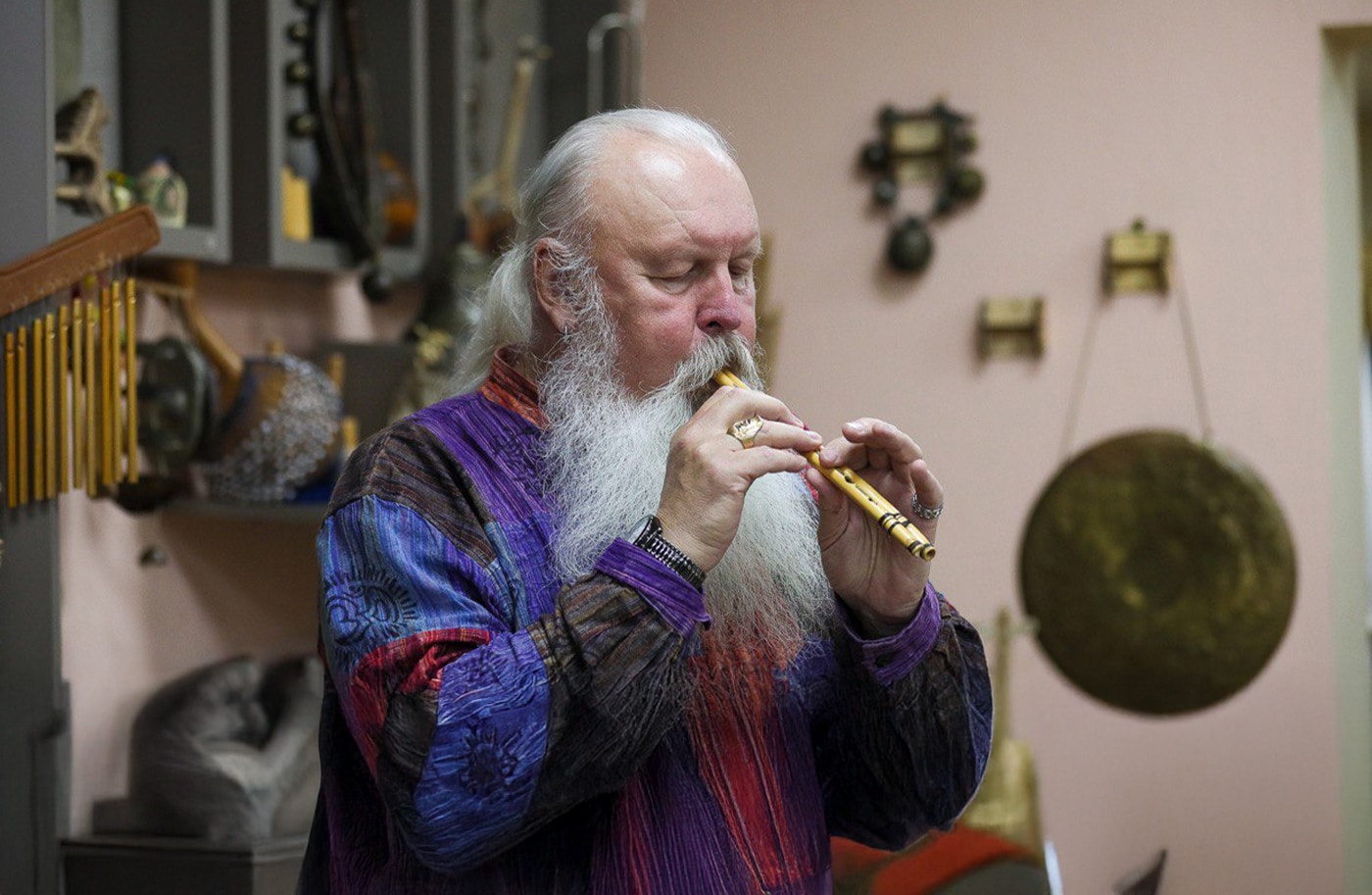
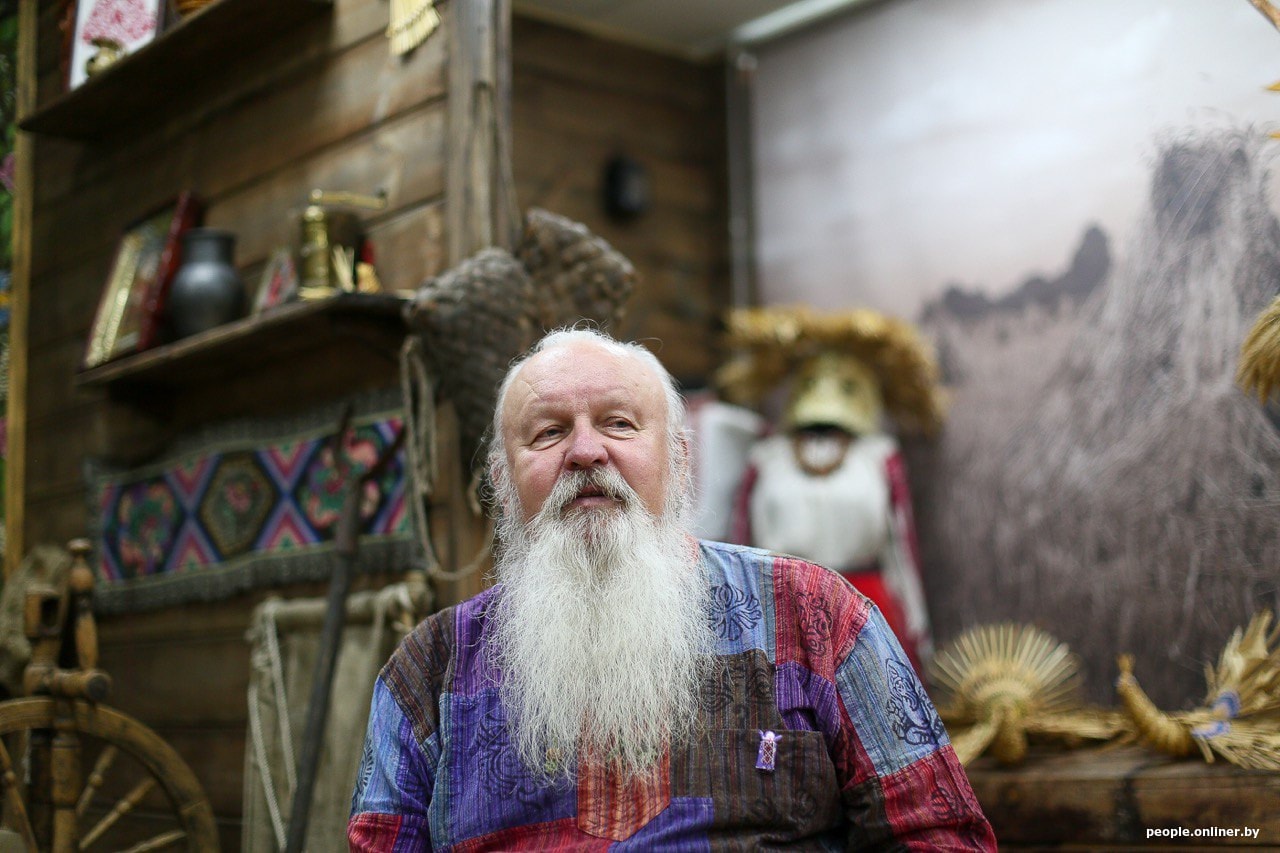
We meet Ivan Kirchuk not in a music studio, but in his ethnolab located at the Institute for Advanced Studies of the Belarusian State University of Culture and Arts. He has taught at this university for years and turned an ordinary office into a small museum of folk life, displaying artifacts he collected during expeditions across Belarus.
“My Famous Hat Was Made from My Sister’s Boots”
It all began back in the early 1980s, when Kirchuk, then working at a cultural education college, was inspired to create his own little museum. Since then, his collection of artifacts has grown to include embroidered towels, belts, chests, clothing, clay pottery, and other items of traditional everyday life. Some have worn out over time, and unfortunately, some were stolen, but much of the collection remains intact.
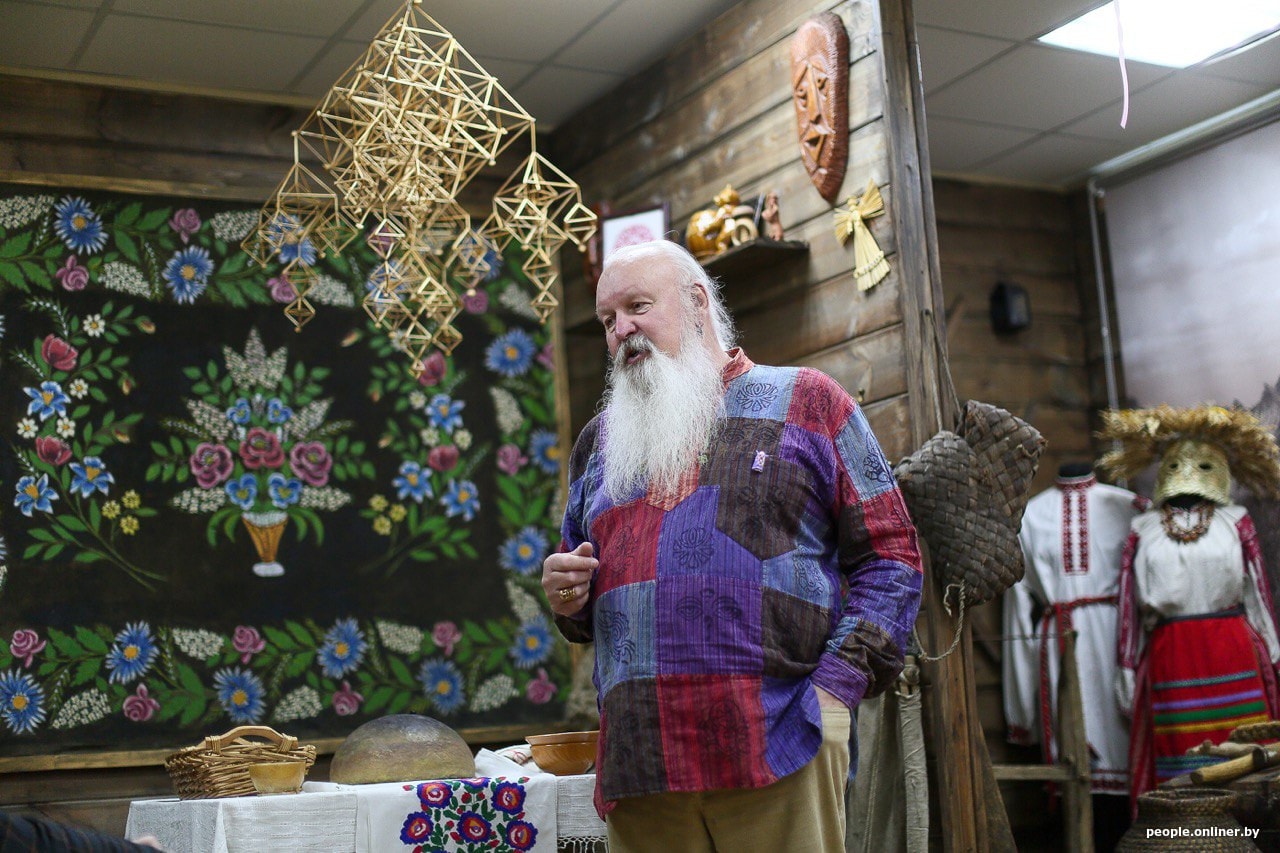
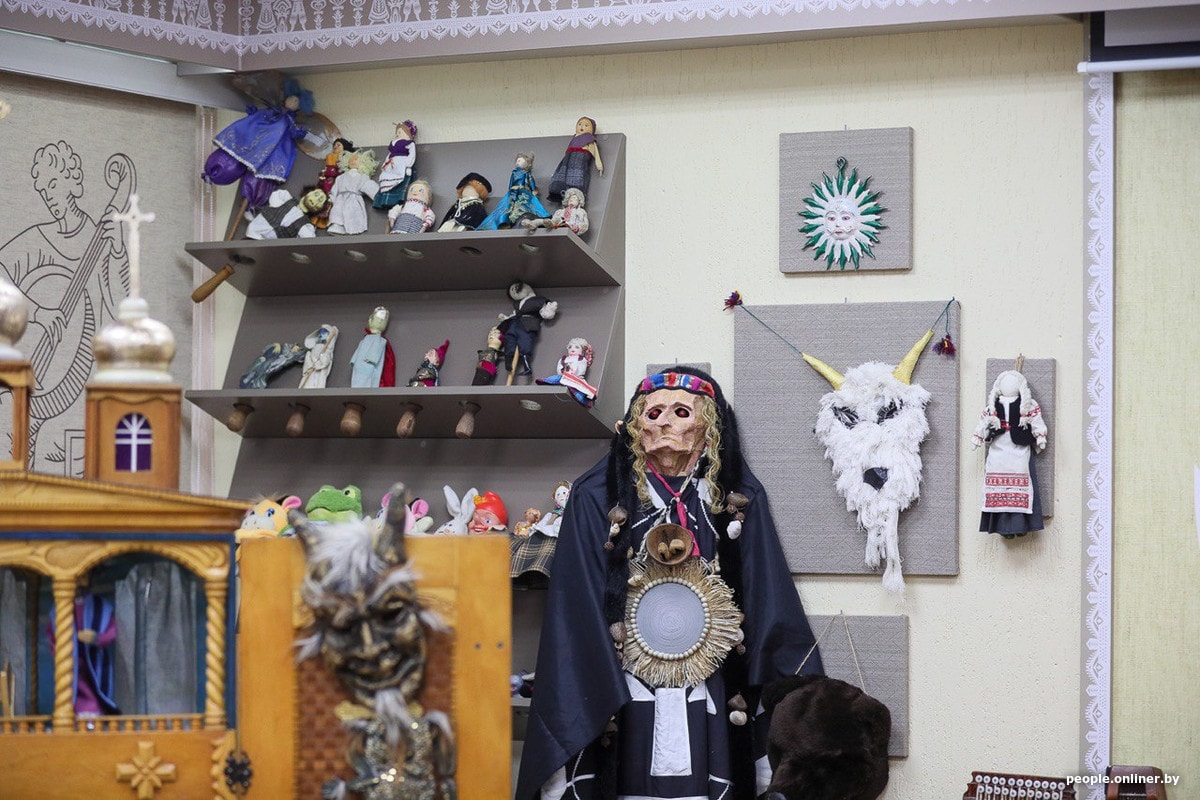
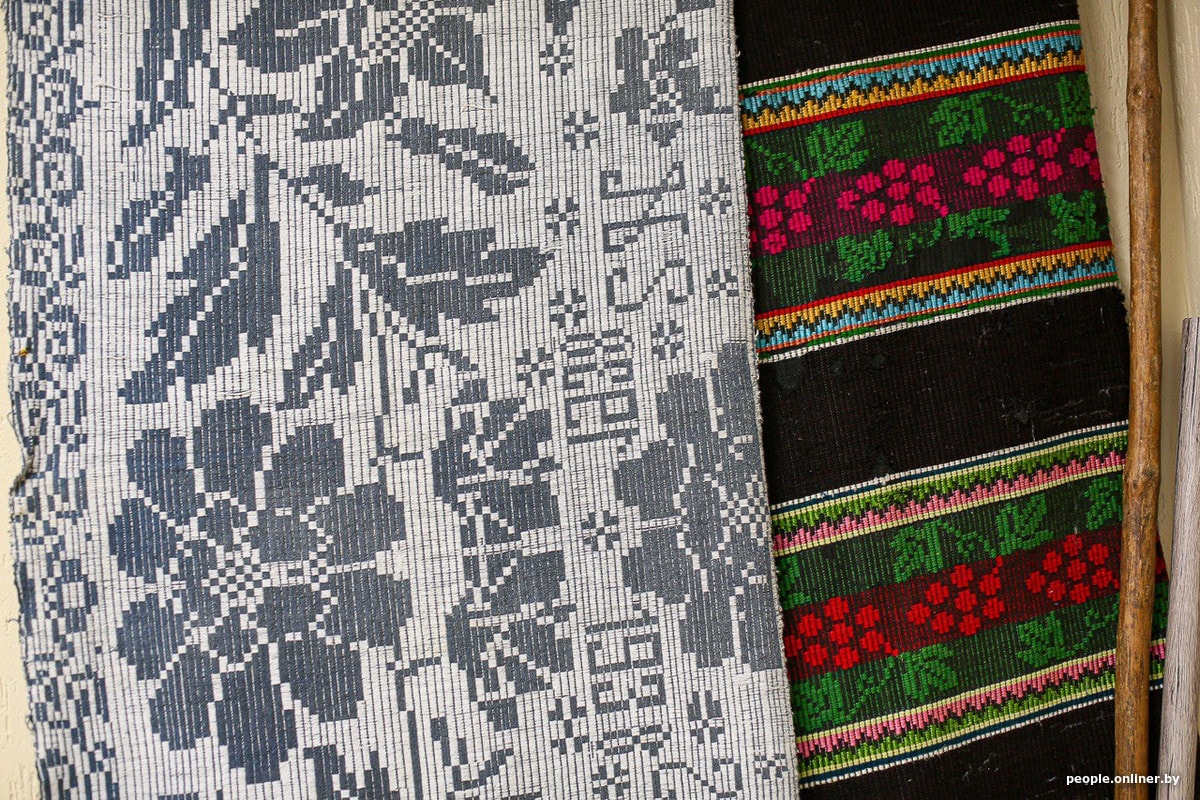
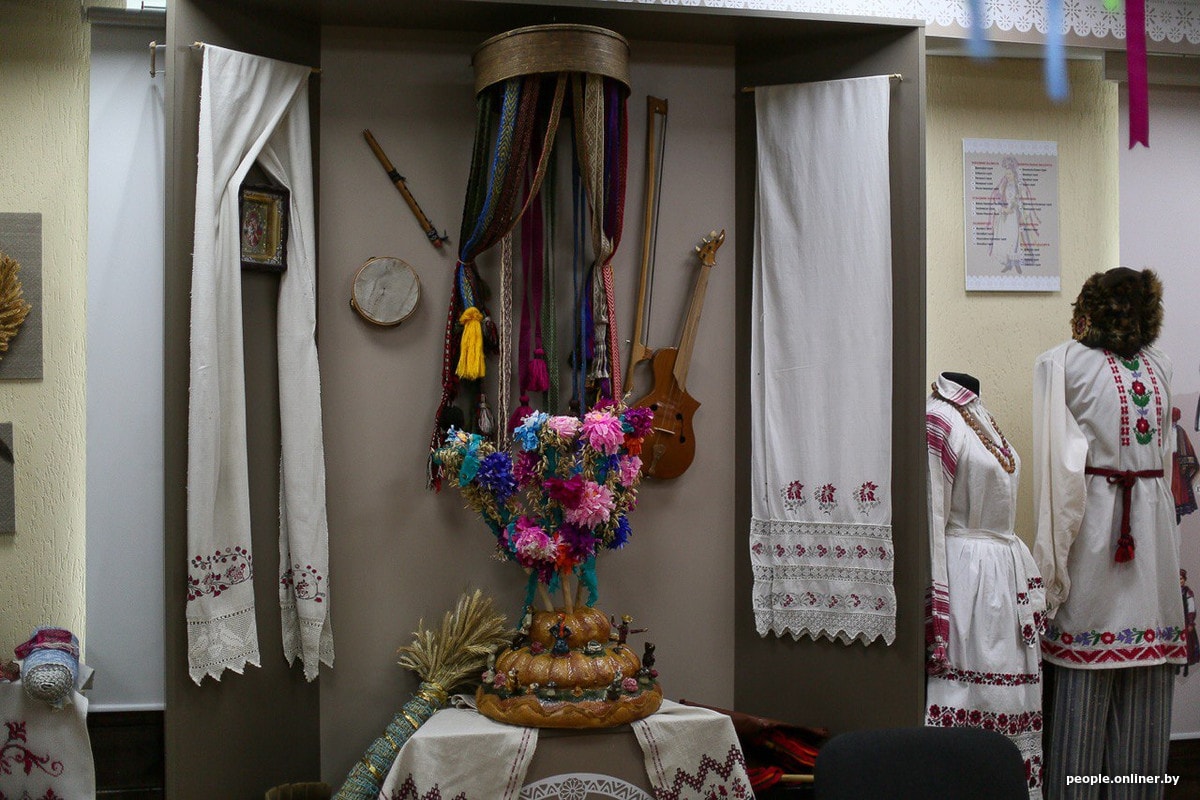
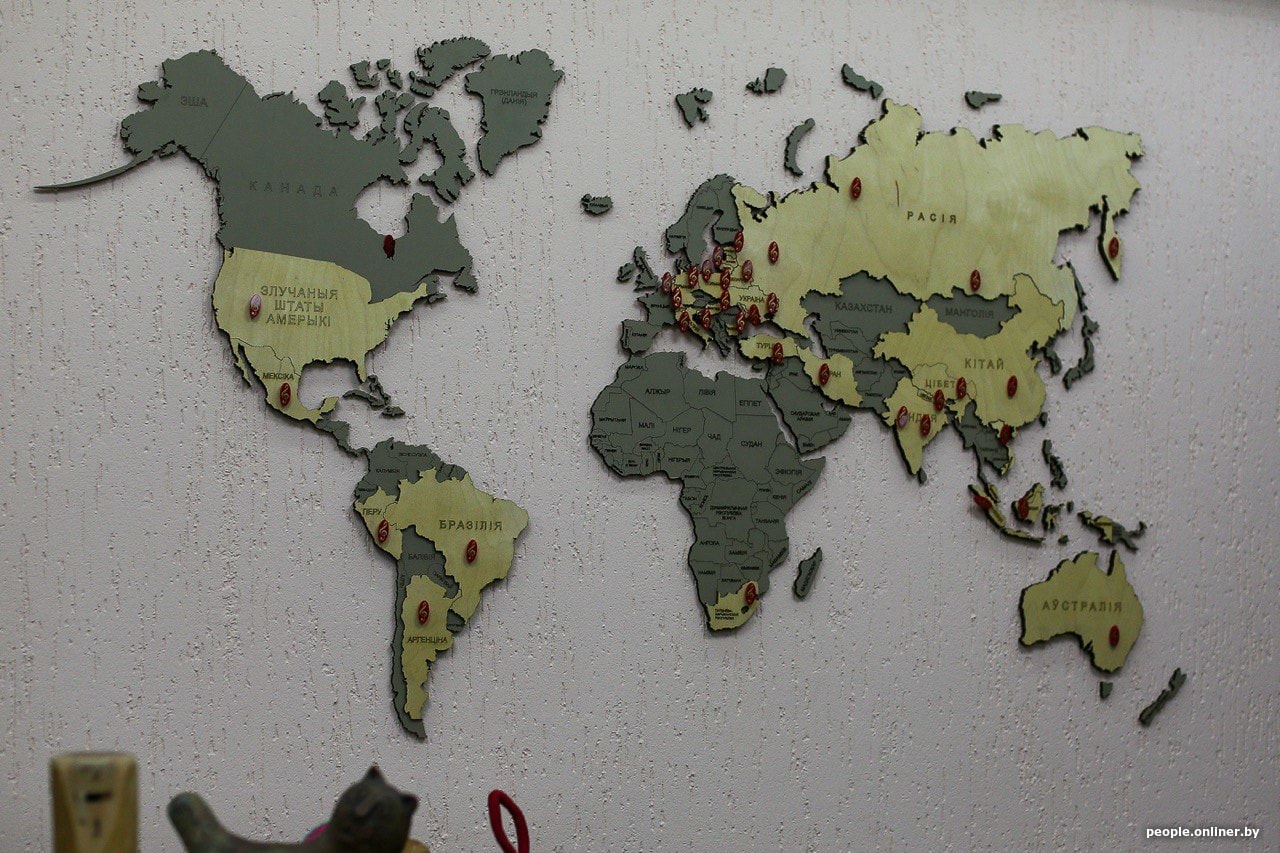
— I never set out to collect anything in particular. The towels, rugs — they appeared because I conducted rituals with students. The first instrument I got was in 1995 — a traditional reed pipe from Kopyl. It was a gift. I tried playing Rechanka, Kupalinka on it — and that’s how it all started,” Kirchuk recalls. And now you see a collection that is still growing. On the wall is a map marked with countries from which I brought instruments. I’ve been to around a hundred festivals — from Malaysia to Chile — and tried to bring back instruments from each trip and play them.
Among the largest concerts he played with his ethno-trio were three festivals organized by Peter Gabriel called World of Music, Arts and Dance (WOMAD). They performed at WOMAD in England, Chile, and at a “pre-WOMAD” in Russia. They say if you’ve played there, you can die in peace — nothing will top it. And we were there three times. To give you an idea: WOMAD gathers up to 45,000 people, while our festival Kamyanitsa at most attracted 5,000–7,000.
— How Much Did You Spend on Instruments?
— I never calculated. Some were expensive, some cheaper. But I can tell you — a lyre in Belarus now costs $950. Did I ever spend all my performance fees on instruments? Yes, that happened.
— You Once Said the Most Musical People You Met Were the Hungarians. Why?
— I don’t know. We went to many festivals there. I remember a ruined castle, an old man comes out — everyone applauds. Then a rock band comes on — again applause. You go down a level and there’s a band like our Palats playing. When you see that variety, your heart aches. And you wonder — why isn’t it like this here? We have a lot of folklore too.
I also vividly remembers Spain: Before one of our performances, the audience started going wild right during soundcheck. We were in shock — we hadn’t even started playing, and people were already dancing! One guy had a busted leg but sat there pounding and stomping. Belarusian music impresses many foreigners — it’s rooted, unusual.
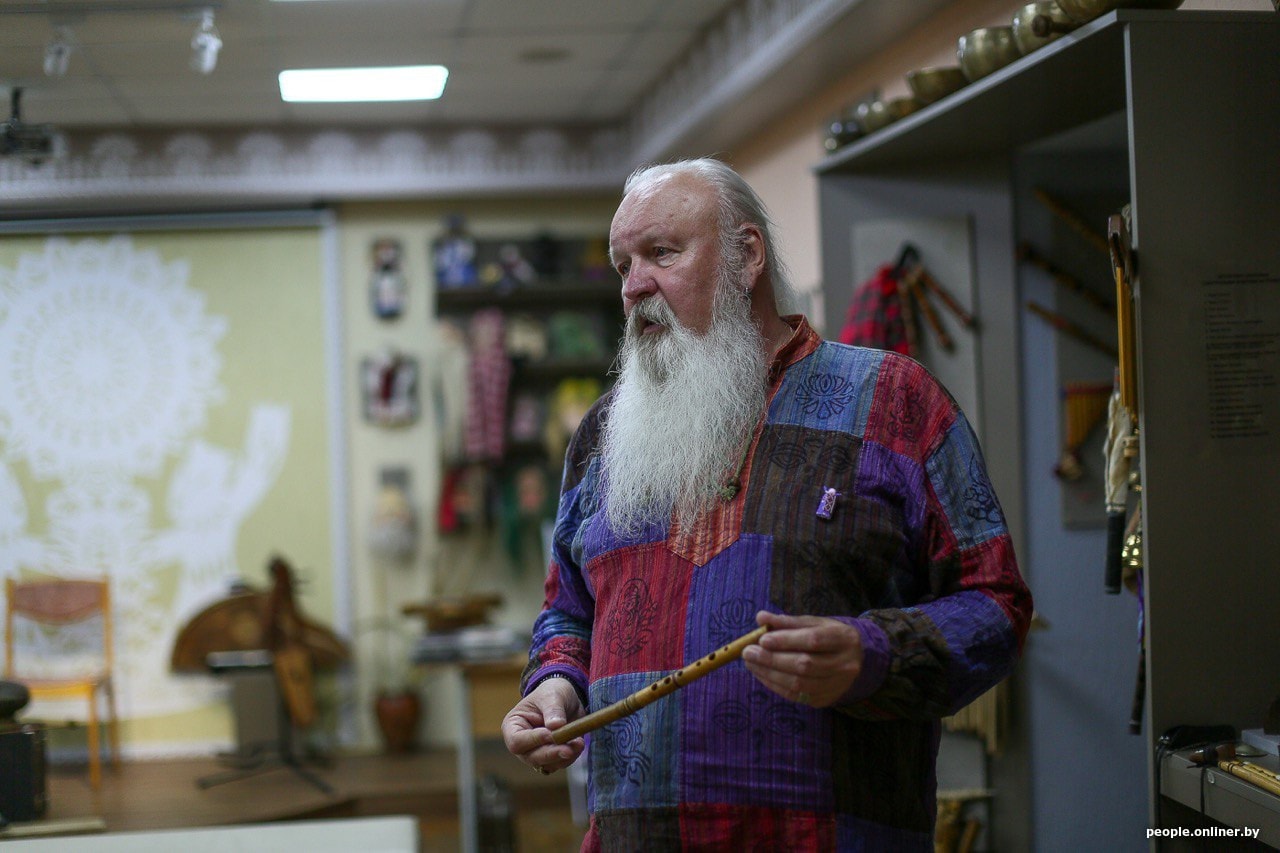
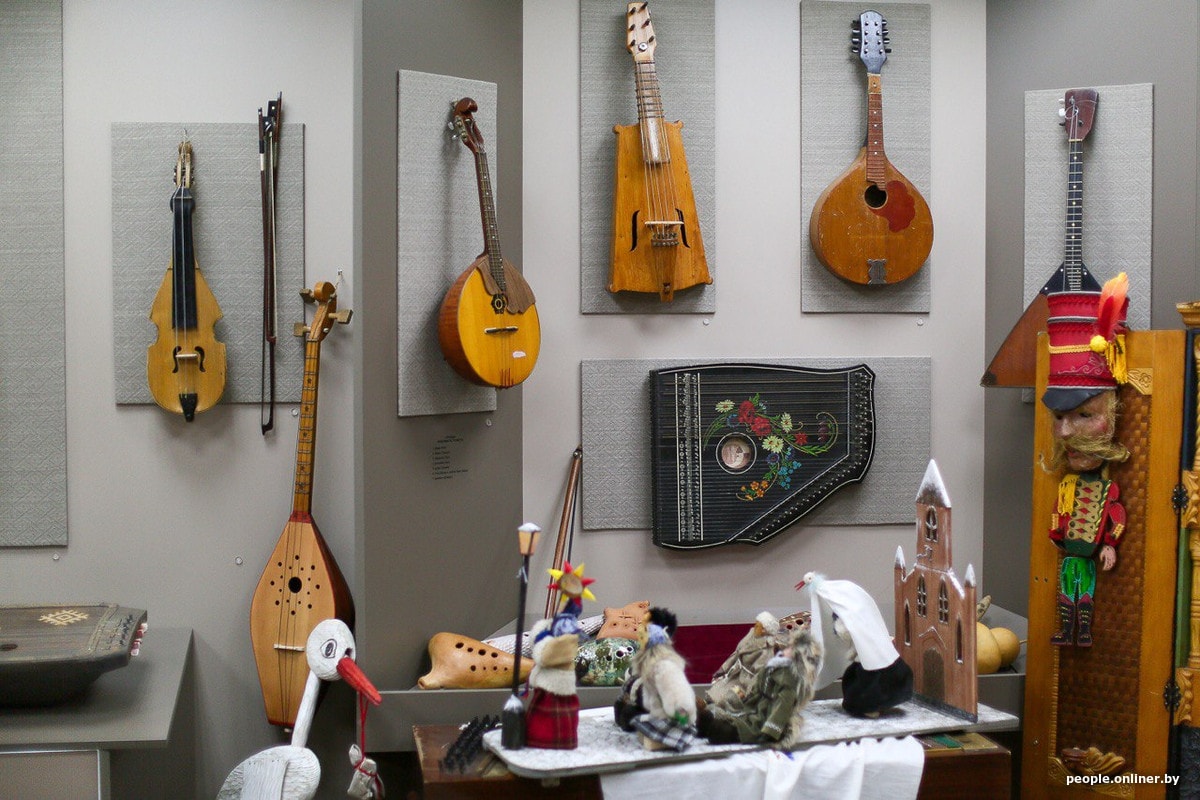
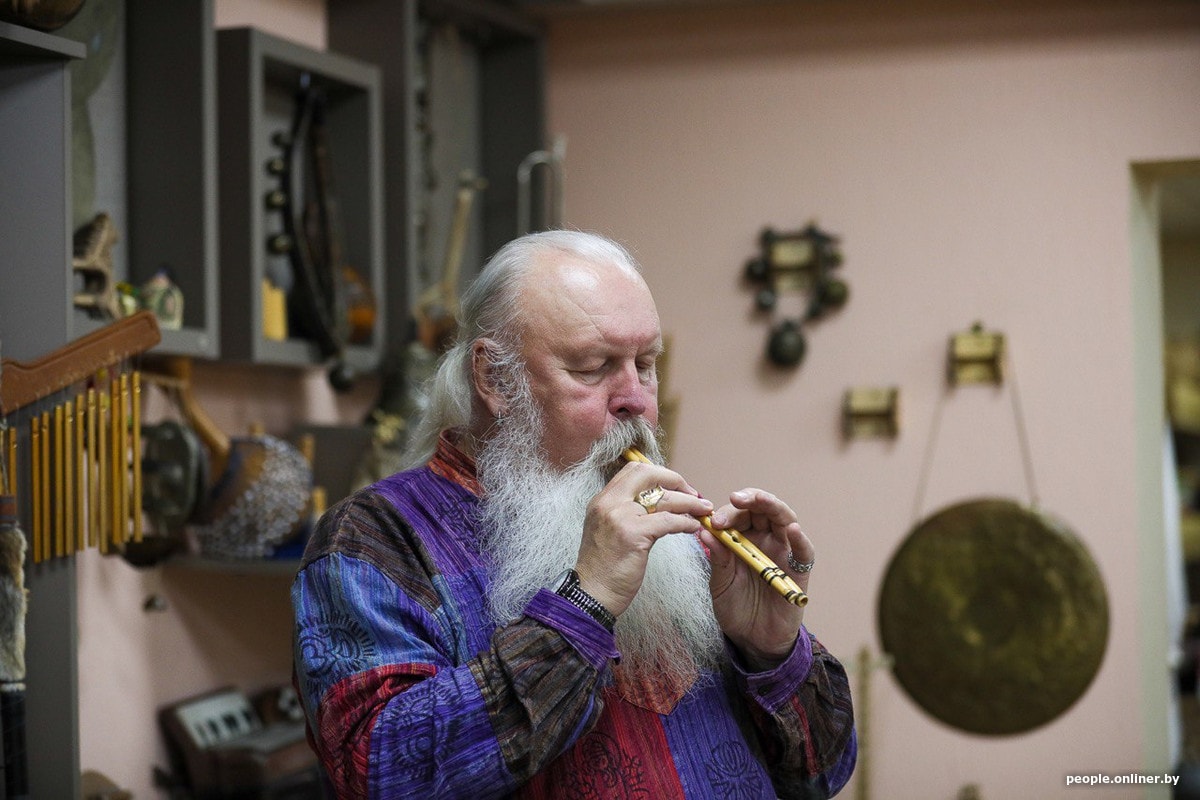
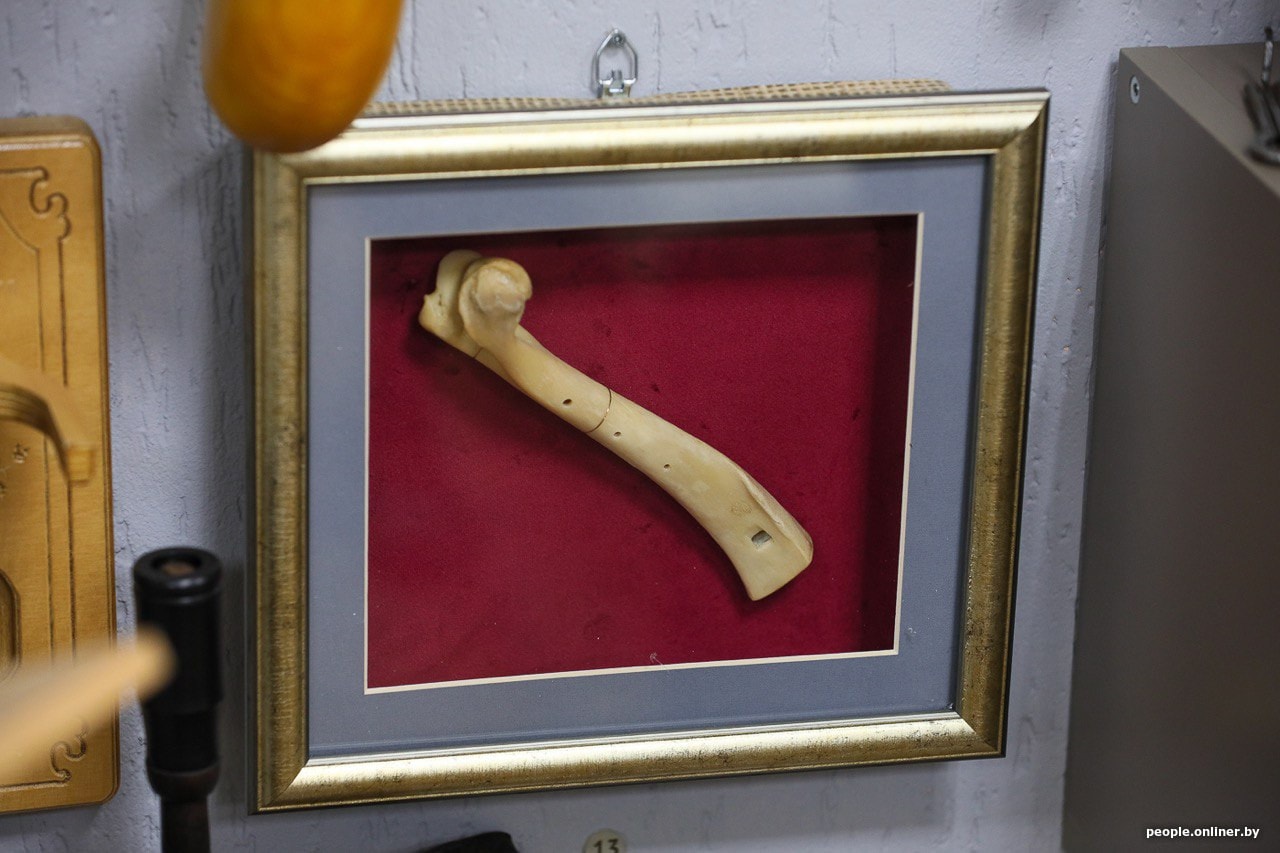
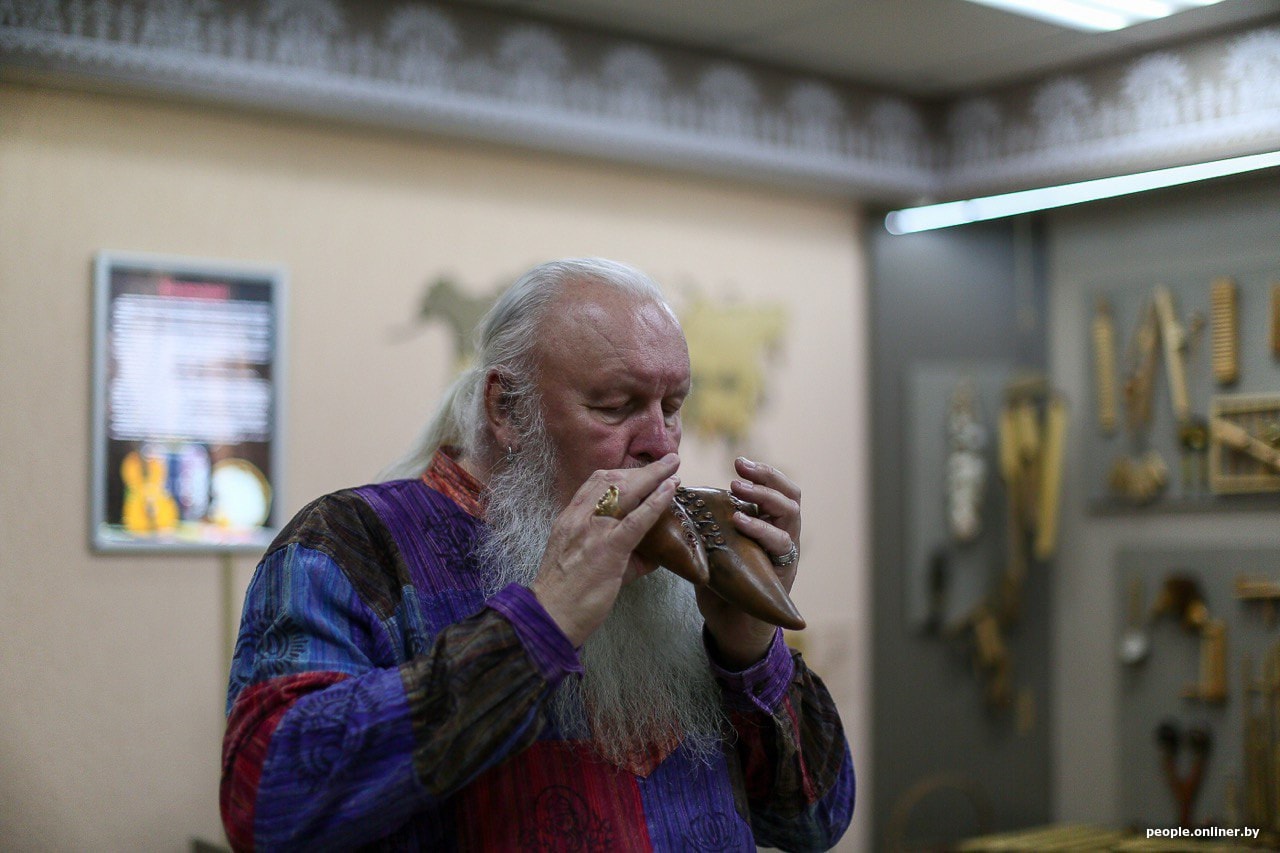
Many of the instruments in Kirchuk’s ethnolab were used in album recordings. Most are still in great condition — and he demonstrated this with a few videos.
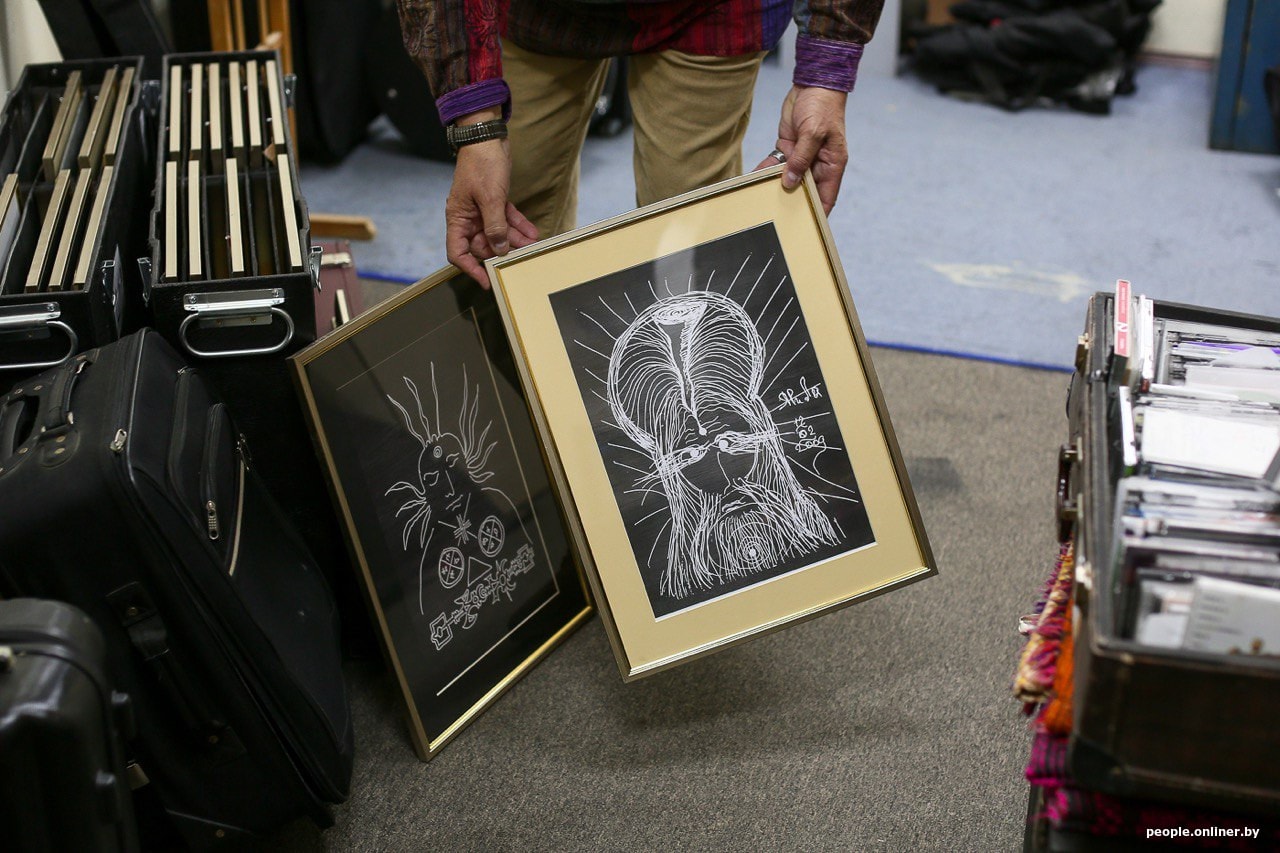
After showing the ethnolab, Kirchuk led us to another interesting place — his personal office. Here he stores his entire musical trove: hundreds of CDs from various bands, field recordings he regularly revisits, and graphic artwork. A few years ago, he organized an exhibit of his graphic works, trying to visually express his music.
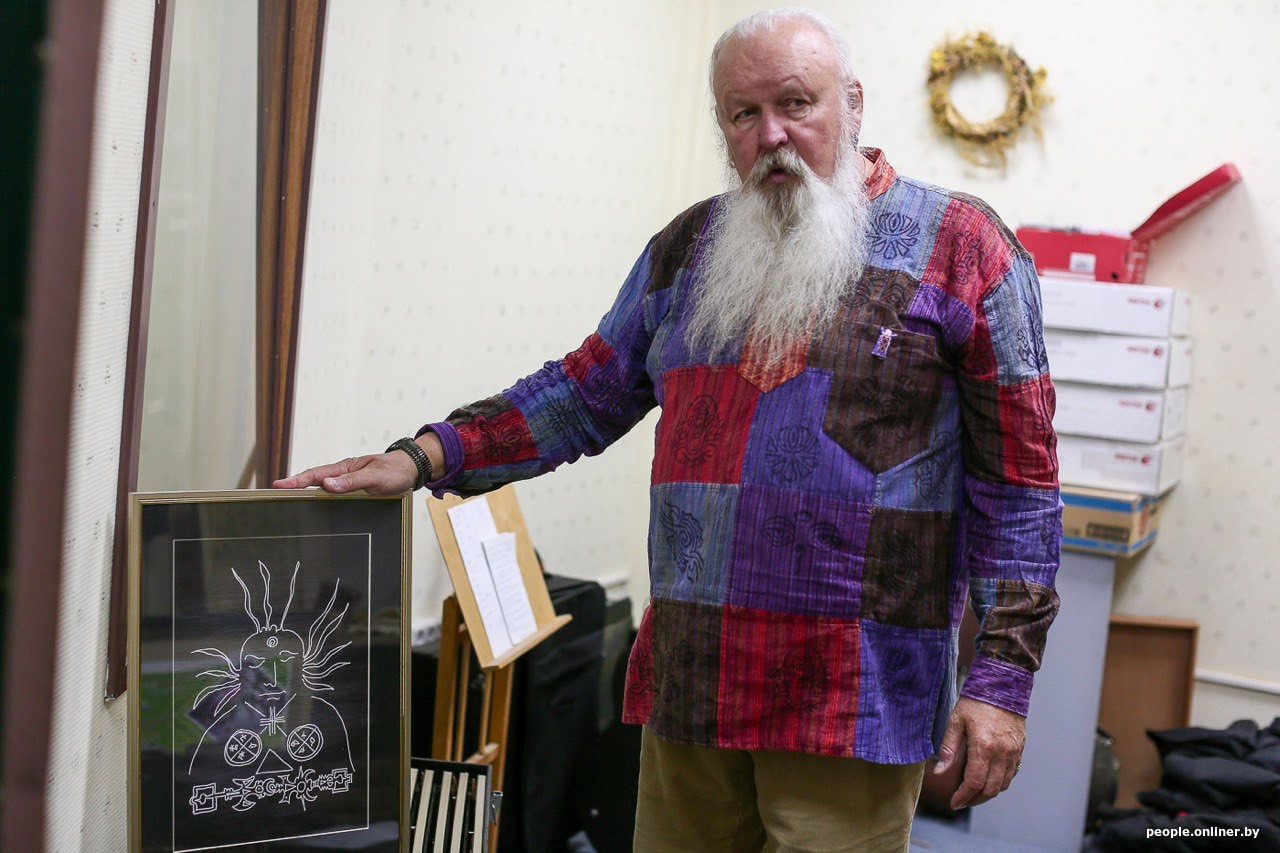
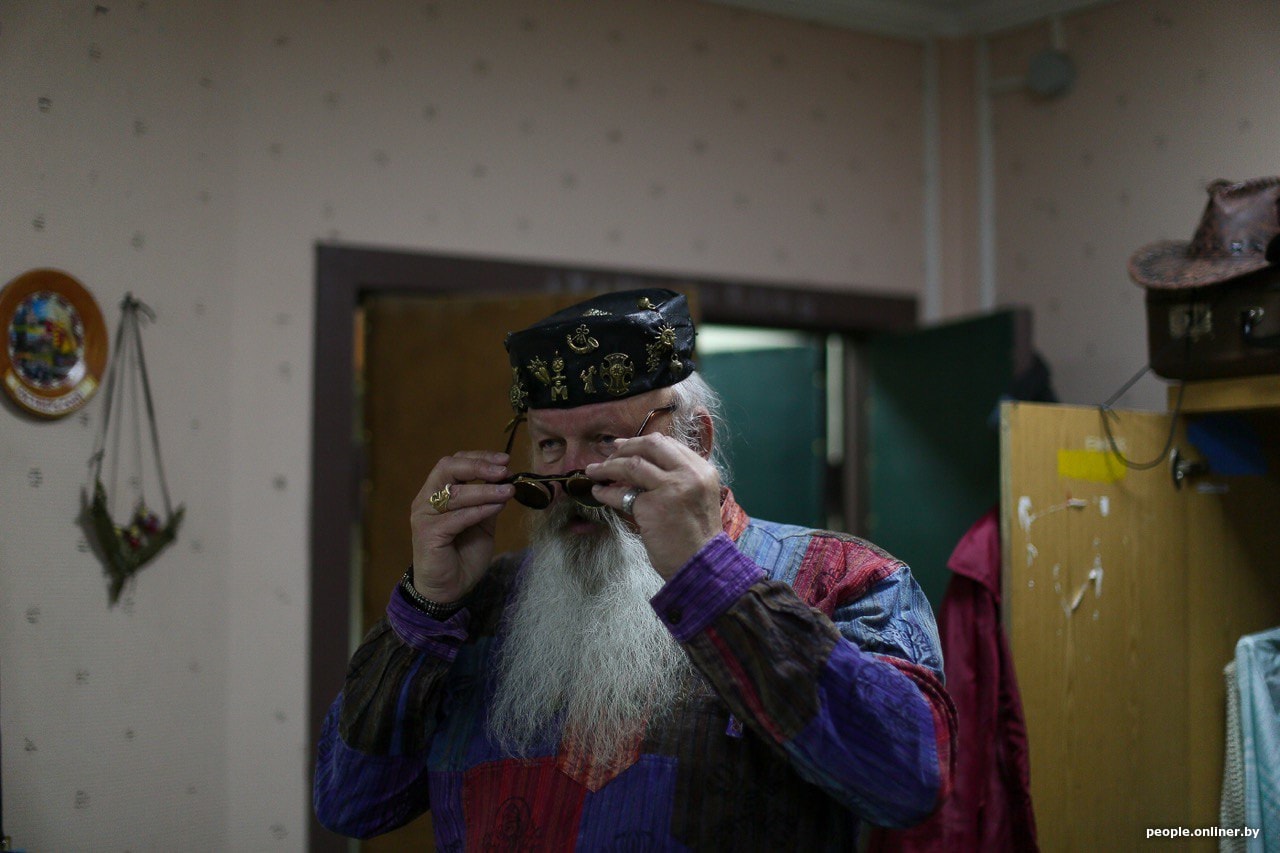
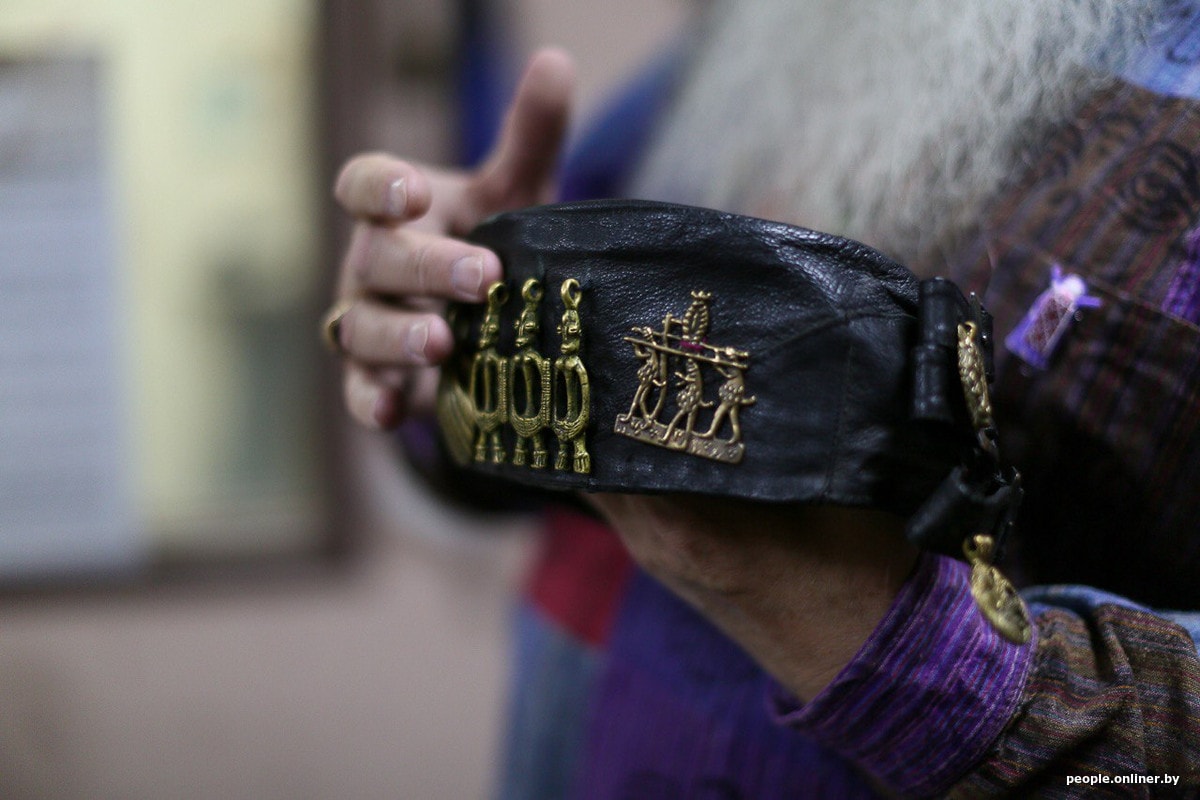
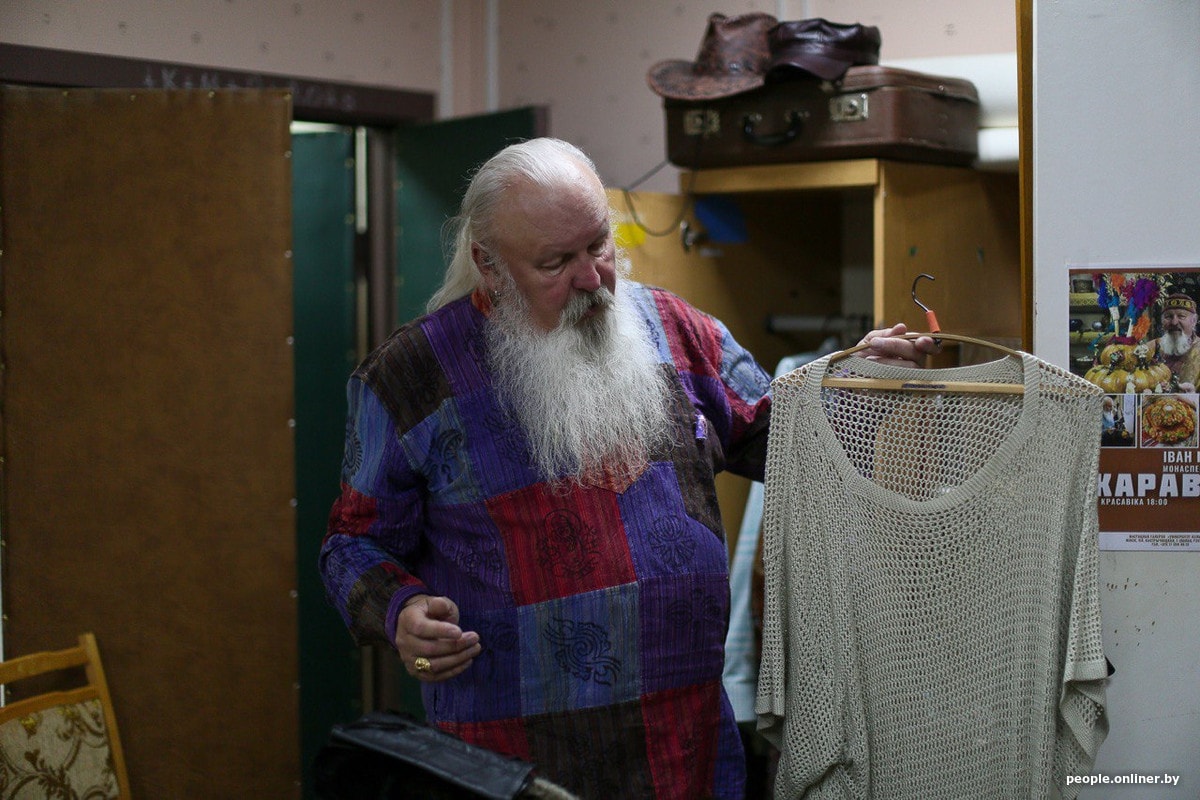
In a nearby wardrobe hang his concert outfits. Also there is his signature leather hat adorned with pendants — part of the image that, along with dark glasses and a full beard, defines Kirchuk for many Belarusian folk fans.
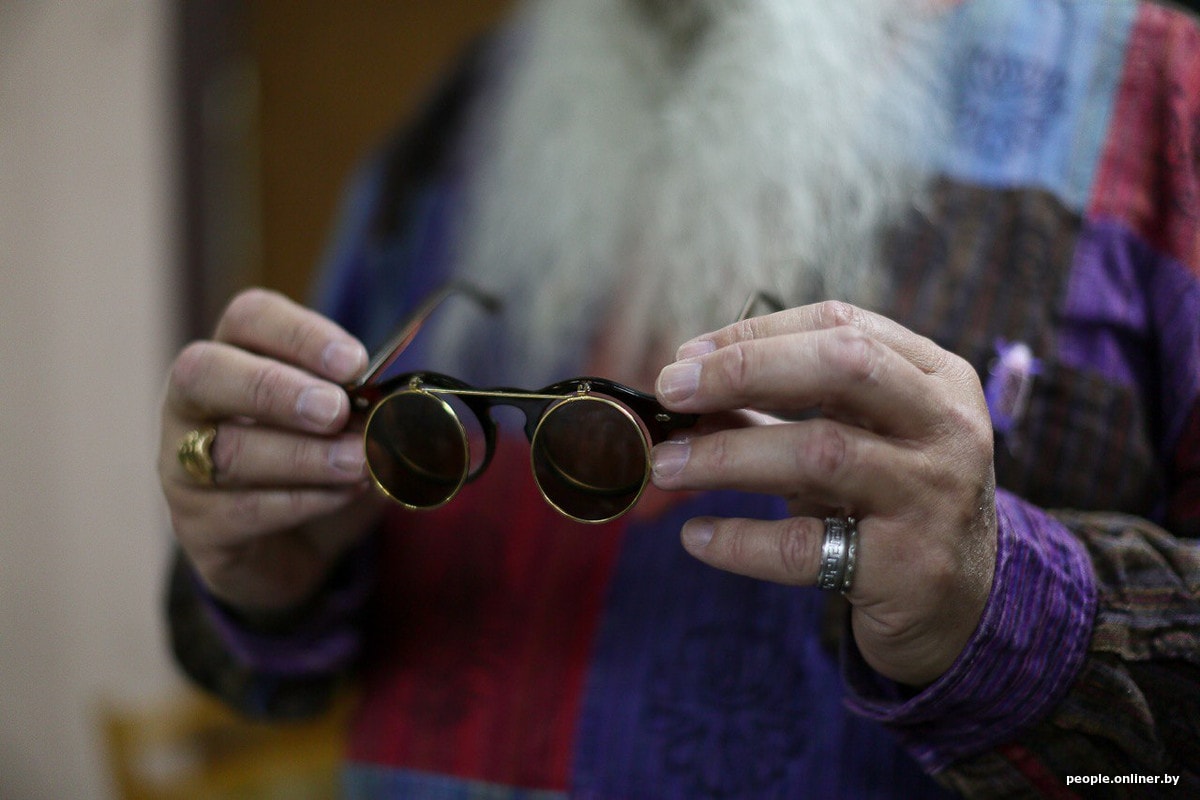
— Belarusians used to wear a fabric meherka hat. I had one sewn too, but it was left at a friend’s in the Netherlands after a tour. When I came back, people said, ‘Without the hat, you’re not you anymore.’ So I had a new one made — from my sister’s boots. That was in 1995. As for the accessories — they came from festivals we played with the trio. The little figures (they’re from Malaysia) are on the cover of our album Sem. One even got a beard drawn on him. And this pair of glasses completes my look.”
— You Perform Belarusian Folk Music — But Where’s the Traditional Costume?
— I’m a modern musician. I don’t wear a traditional embroidered shirt. All my costumes are invented. I’m a citizen of the world. I play ethno-music — why shouldn’t I wear what I want?
“I’ve Had COVID and a Heart Attack — But It’s Too Early to Fold My Hands. Work Keeps Life Interesting.”
— Ivan Ivanovich, What Have You Been Up to in Recent Years? What’s Life Like Now?
— I’d say it’s not worse than before. I’m fully immersed in work. Even during COVID, we had up to 30 solo performances a year. We played all kinds of venues. I even performed at someone’s summer house — two or three families would gather and invite me with my instruments, puppets, and batlejka (Belarusian puppet theater).
Last year, for example, Kirchuk staged a one-man show in Mozyr titled Confession Under the Eaves, which depicted a person’s life from birth to death. This year, he returned with a musical program featuring gusli, lyres, and the smyk (bowed instrument). And don’t forget — I have students and listeners. Over 2,300 people visit the ethnolab each year. I’m glad I can prepare different performances, create new programs, and experiment with folklore.
“If I’m heading to a theatrical performance, I take 22 bags — basically a van. If it’s a solo concert, like at the Sveta Sontsa (Sun Festival), I bring 8–9 instruments.”
— What Do You Usually Take to Performances for Kids? The Batlejka?
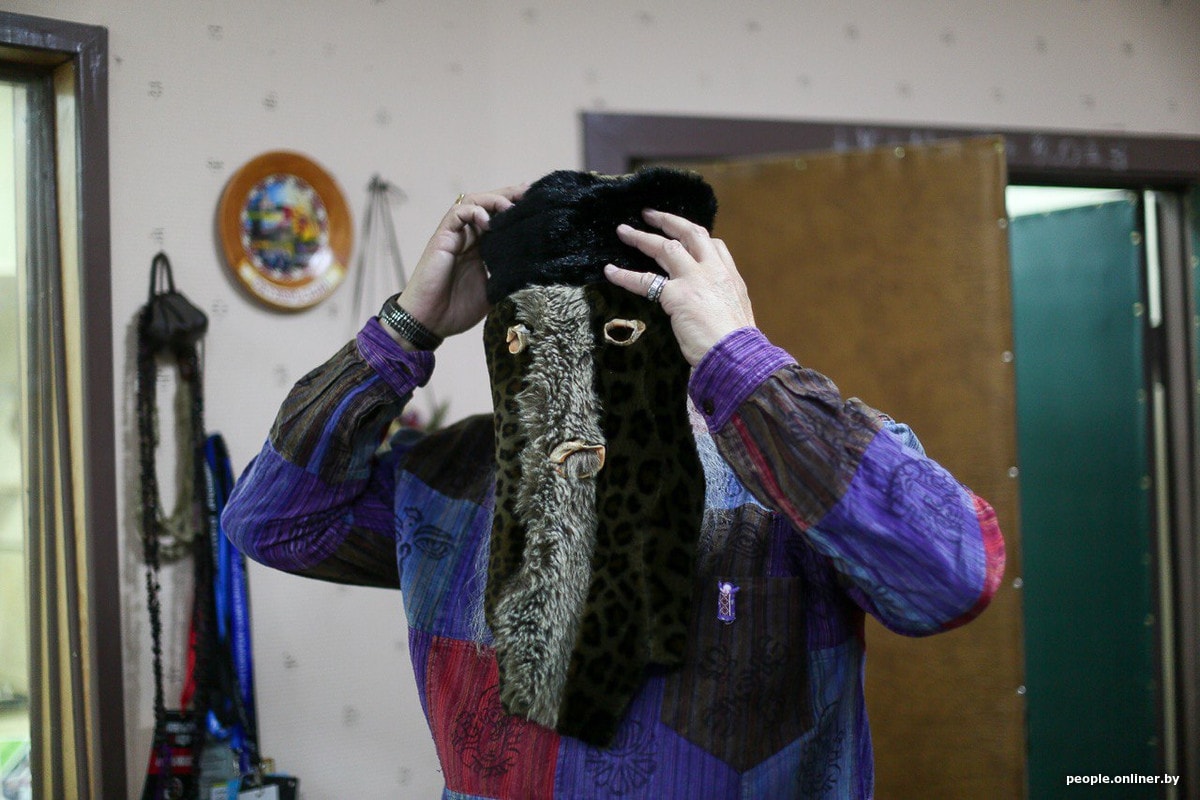
— Not always. It’s better for winter — like around Christmas. I have hand-held masks, and puppets that attach to your leg and start jumping. They were made by craftsman Viktor Dudkevich from Hlybokaye. So, again, I don’t always bring the batlejka, though Dudkevich made a collapsible version that fits easily into a car trunk. Kids love all kinds of noisy musical instruments. At the end of a show, I often hand them out — and then the fun starts: someone’s rustling, someone’s banging, and I’m singing in the background.”
— How interested are you personally in giving such intimate concerts and performances, when you’ve previously taken part in large festivals with thousands of spectators?
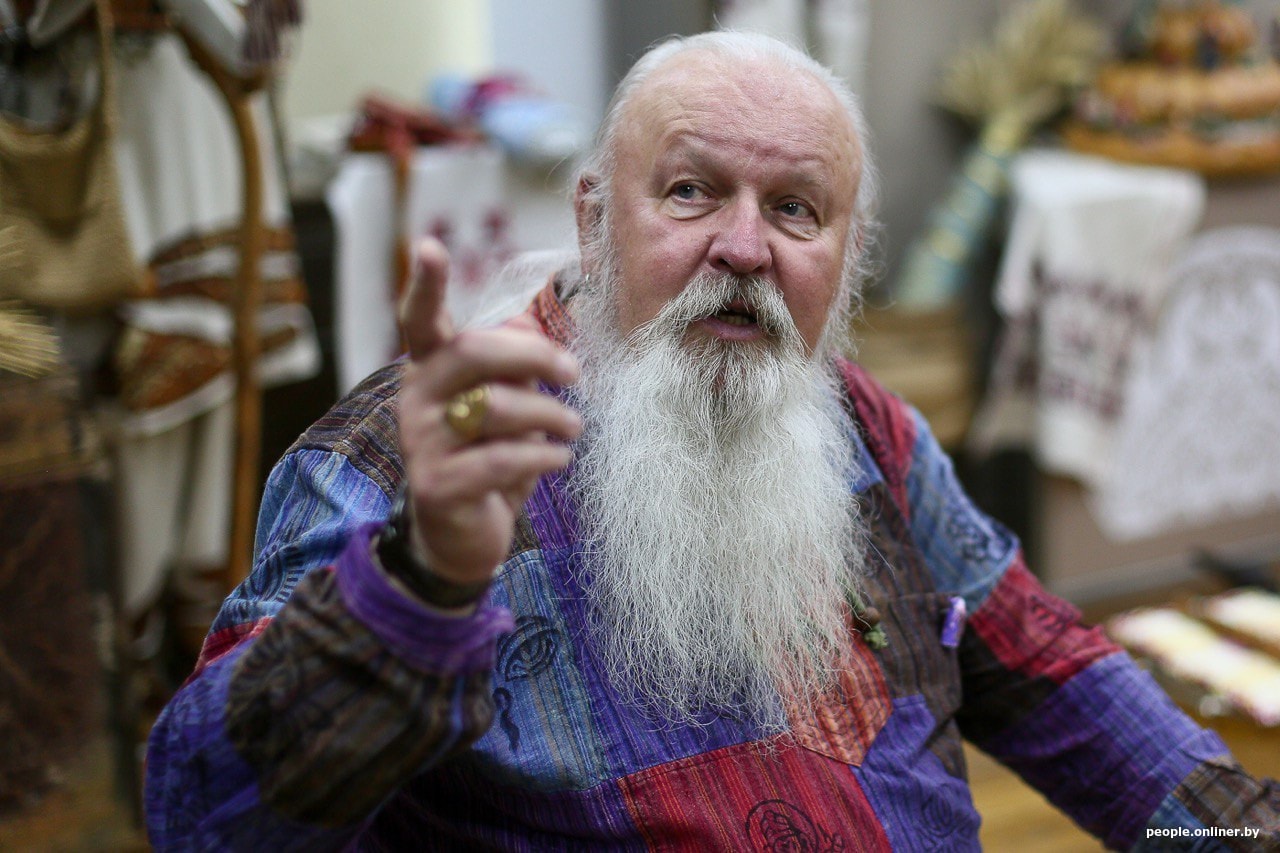
— But even now I perform on good stages with quality sound. How can I put it… Sometimes an actor spends his whole life playing the role of a bandit. And I have the opportunity to perform solo, to sing solo. The chamber format is also close to me. I can come closer to the audience, show them the instruments, talk about each one. But when you’re on a big stage, not everyone will come up to you. I remember I had a wonderful creative connection with the Loshitsa Park. I performed solo in the manor house, the chairs were very close, and the children could see everything clearly. There was real wonder in their eyes: “Are these really our Belarusian instruments?!” That was very touching for me.
By the way, we’re involved in more than concerts — we also publish books. We’ve already released the fiction titles Cities of Ascension, Enchanter, and the monumental work on rituals and musical tales Perun’s Flower, which I prepared together with my wife Katerina. I’m very grateful to the company Regula for that book — they heard on the radio that I was raising money for it, and they decided to help.
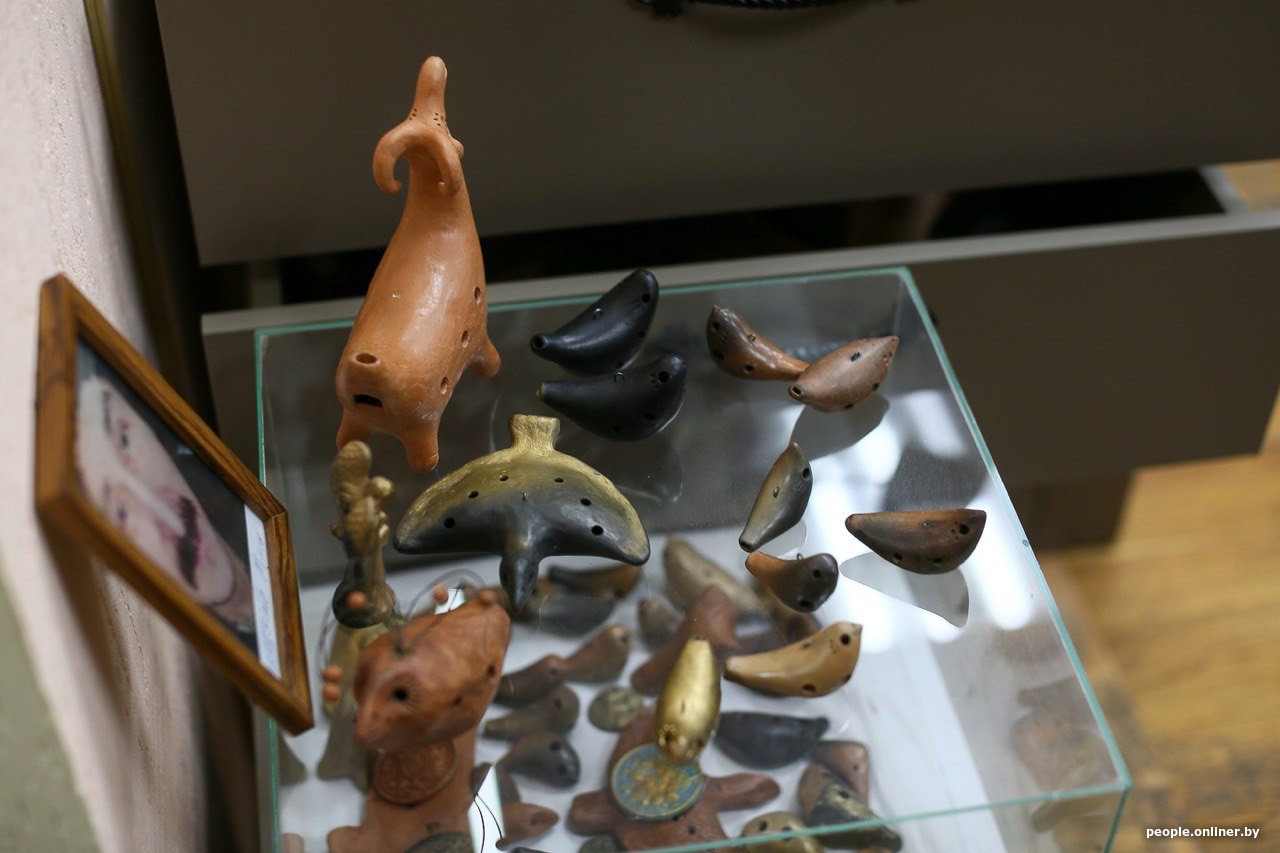
Now we’re planning a series of little folk-fantasy books. They’ll be tied to musical instruments and dedicated to the memory of folk artisans. For example, I have a collection of works by Vladimir Minin, a ceramicist from Mir. He passed away, and his wife was going to throw out his ocarinas, but she offered them to me instead. I went and took everything, photographed and filmed them — and now those instruments are preserved with us. And they sound great — you can actually play them.
“Discs will be available at Akademkniga. There aren’t many right now, but more will arrive next month.”
— Interesting. How comfortable is it for you to perform solo rather than as part of a group?
— I’m comfortable both ways. In the second half of the 1990s, I went alone to Bosnia and Herzegovina, taking with me a puppet theater, a mask, and some instruments… It turned out great. When you’re one-on-one with yourself, you can just rest your hands on your belly. But that time hasn’t come yet. I’ve had COVID, I’ve had a heart attack, and at some point I even thought: that’s it, I won’t do anything more. But a musician has to work. If there’s work, there’s interest in life.
— Speaking of your musical work — you recently recorded a solo album in Canada. Tell us more about that project.
— Last year a friend invited me to Canada. He arranged four venues in Toronto, Montreal, and Ottawa where I performed my solo show Enchanter for both Belarusians and Canadians. It went very well — I was warmly received. One evening we were talking and someone asked, “Ivan, what else would you like to do?” I said, “There are some very beautiful recruit songs. Sadly, there are wars in many places today. I’d like to record the songs that men once sang.” You see, Peter the Great introduced lifelong conscription (later reduced to 25 years under Catherine II — Onlíner). Just imagine everything a man went through during that time beyond the war itself — remembering childhood, his mother, bread, lullabies!
They supported the idea. I gathered about 18 folk songs recorded in different regions of Belarus and sent them to Canada to composer Vassili Goussakov and musician/producer Zmicer Leanovich. Our Belarusian-Canadian project was called 3MI (meaning “WE” in Belarusian). We recorded in February. In my opinion, we captured eight powerful songs. They’re already online, anyone can listen. I really enjoyed working on the album because it brought a new approach to folk music. The format was new for me — and for Vassili and Zmicer too.
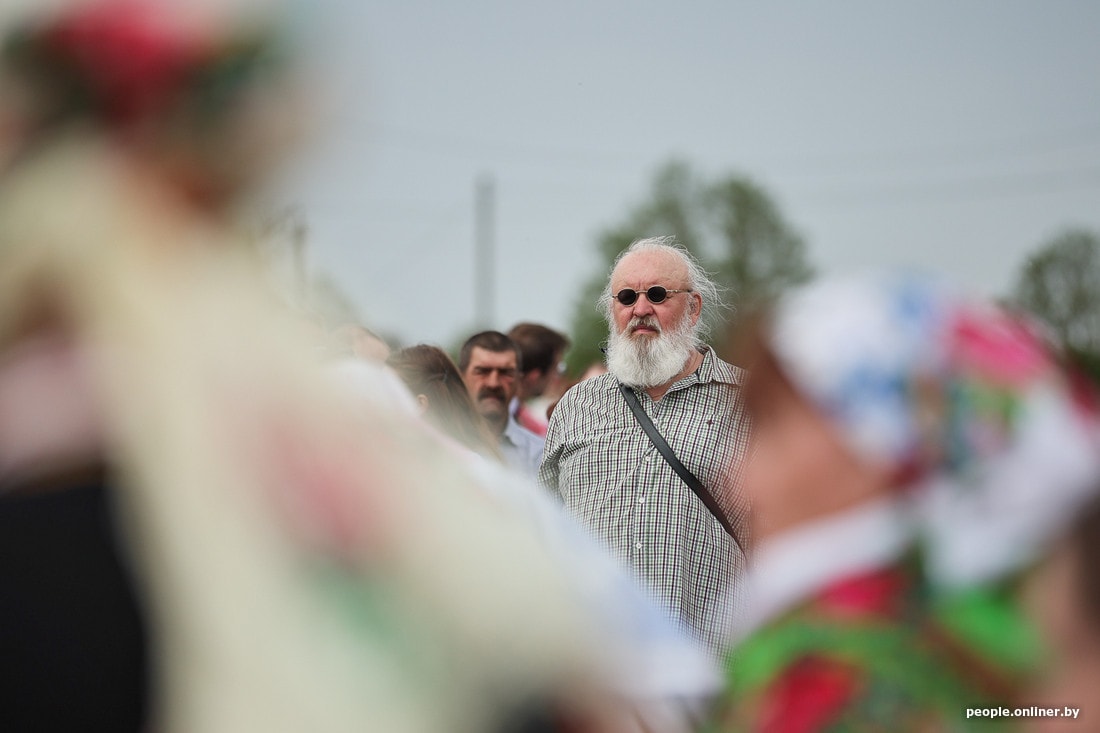
— A year ago we saw you at the “Yuriev Round Dance” ritual in Zhitkovichi District. Are you still actively traveling the country, listening to and recording folk songs as before?
— As people grow older, they become wiser and find time for everything they truly need. This is something I care about. By the way, in my book Perun’s Flower there’s a grandmother (Katerina Panchenya — a local woman who preserved the “Yuriev Round Dance” ritual — Onlíner) who, unfortunately, was no longer participating in the ritual. But I met her during filming of the Ukrainian-Belarusian documentary Code of the Ancestors (released in 2020 — Onlíner). I traveled across Belarus, singer Katya Chilly traveled around Ukraine, and then we met to exchange thoughts: did we find the code of our ancestors? Of course not. But during filming we had fascinating encounters with people. The film ended up winning the “Straw Bison” at the Listapad film festival.
I’ve gone on many expeditions, and I have treasured memories of the grandmothers I met. Before every concert, I sit and thank them for preserving these songs for us — they could have been lost. Sometimes you’d arrive and a grandmother would say, “Son, I’m not in the mood for songs. I have so many children and grandchildren, and none of them visit. I’m living out my days alone.” Not everyone sings. But when I was collecting these, I felt like a treasure chest had been opened before me. My first expedition was in 1982–83 to the Lyuban District, in the village of Sorochi. I still perform the songs I recorded there. They were included in the audio-album Enchanter.
“Folk songs are so powerful that during concerts, some people tremble or cry and then ask: ‘What did you do to us?’ I say: ‘Nothing. We’re just singing songs.’”
— It’s clear that in the 1980s, there were still people who were carriers of these songs. But can you still find them today?
— Even back then, people said folklore was dead. But how can that be?! Folk wisdom and traditions exist. Come to a festival and you’ll see items made of straw and clay. The tradition lives on. Our ancestors won’t let it disappear. The same goes for folklore — it will persist, just in a slightly different form. That’s natural: times change, the earth’s rhythm changes. But the foundational things remain.
— If you could go on another expedition now, where would you go?
— To Lida District, to the village of Krupki. There was a grandmother there whose song I included in Enchanter. She was 96 and sang to me for a whole hour.
“If earlier expeditions felt like a hunt for a collection, now I live through each song I find.”
I believe there are still hidden corners we haven’t reached. There’s still so much to record. And we have to understand: a grandmother won’t just sing you a diamond of a song right away. You have to sit with her, talk, and almost become family. Then you’ll hear true life wisdom from the depths of her soul.
— I’ve heard you don’t quite like the way the “Koniki” ritual is performed in David-Gorodok nowadays.
— When we filmed Code of the Ancestors, we saw just one konik (the lead character of the ritual. He heads a group that visits homes to give blessings. There can be up to ten such groups in David-Gorodok — Onlíner). The rest were characters like Fantomas and Cheburashka. I wouldn’t say I didn’t like it — I’d just gather all the team leaders and say: “Guys, if there was such a tradition, let’s make, say, 100 koniki, and then let Fantomas join.” And one more thing — alcohol. They told me, “It’s tradition.” But how can it be tradition if old men in Polesia told me no one drank during the rituals? They collected offerings and moved on. Sure, it wasn’t always like that. But now things seem turned upside down.
— Speaking of drinking, you have a humorous song called “Seven Shots.” Where did you record it?
— I don’t even remember anymore — some grandmother, I think in Polesia. But the song conveys a story: one shot to gain courage, another to have fun, a third to get tipsy, and eventually you’re drunk — but you sang and danced. It’s a kind of program, not just “between the first and second, I face-plant into my salad.” I think it’s a humorous song. But every song still has its philosophical foundation.
On the Popularity of Kadysheva and Folk-Pop
— Among young people, including Belarusians, Nadezhda Kadysheva is now popular. What do you think of this?
— I suppose that’s their taste. I’m not saying I don’t like her. But I believe there must always be an alternative — which we don’t have. There should be, for example, Pesnyary alongside village grandmothers who could come and perform in Minsk. I had listeners who came to see me years after our sessions and said: “Ivan Ivanovich, we did everything you said, but the locals came and asked, ‘Who’s howling in your entryway?’” I said, “Hold on. Put the group on stage, tell people who they are and what they sing. The more you explain, the more interesting it will be. As for those who shouted — put them in the entryway. They’re not ready yet.” Everything needs to be explained. But our youth isn’t bad — they often visit me. I had students who came to every Saturday session. And I never forced them — they were genuinely interested.
— And what do you think when folk songs are performed in a pop style?
— That’s normal nowadays. The singer Zventa Sventana has a song “Poppies on the Hill,” and it has over a million views on YouTube. Why? Because of the visuals — costumes, hairstyles, choreography. And when she was asked why she did that, she said, “How else can you interest young people?” And really — why not?
“I’m a young father — I have three small children”
— I don’t want to talk about age, but this year…
— I’ll turn 67.
— Officially, you’re a pensioner.
— Yes, I still work — and I have three little kids: 5, 8, and 11. I’m still a young father.
— What’s it like to become a father after 60?
— My grandfather Tomasz had 14 children. One of them was my mother. I have two older sons. And this is my last family. Katya and I have had three children over ten years. So I’m not thinking about retirement. By the way, the kids will come to hear me at the “Festival of the Sun.”
— How do they relate to music?
— They go to music school. But they don’t quite understand what I do yet — they’re still small. But they know their dad is a famous musician.
— What’s next?
— I’d like to organize my own museum. Time is passing, and your question about age wasn’t in vain. Anything can happen. There were musicians who collected instruments, and after they passed, their bags and cases were kicked around — their relatives didn’t know what to do with them. I’ve donated some items to the Belarusian University of Culture and Arts because they’ve created a beautiful space there, but I still have many other instruments. I’d like to donate those to the city someday. Together with my manager Andrei Rodionov, we’ve looked at lots of venues with zero rent, but they need so much renovation it’s hard to even start. But it doesn’t have to be the Kirchuk Museum. I’d like to create an ethnocultural center, a place everyone could use. I know it’s hard, but if someone passionate comes along, I’d be happy to make it happen.
Source: Yakov Zhurbin. Photo: Maksim Malinovsky / onliner.by