
“Life goes on, even during war.” Belarusians of Canada have recorded an album about the fate of a soldier
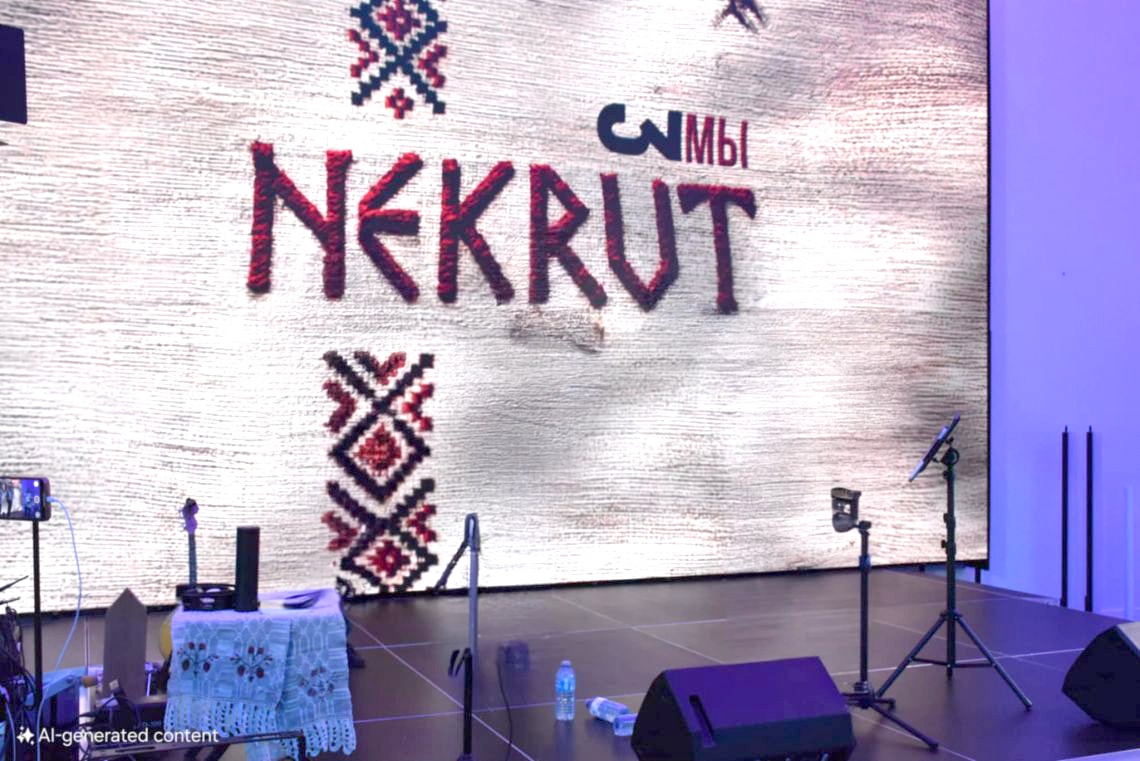
New Ethno Project “3MI” Featuring Ivan Kirchuk of “Troitsa” Releases Album “Nekrut” About the Fate of Belarusian Soldiers
In May, the new ethno project “3Мы” (pronounced “ThreeMe”) — featuring Ivan Kirchuk, the leader of the legendary Belarusian band Troitsa — released an album titled “Nekrut”, dedicated to the fate of Belarusian conscripts taken for 25 years into the army of the Russian Empire. The songs fuse traditional Belarusian folklore with modern musical forms. We spoke with Zmitser Leanovich, musician and producer, who has lived in Canada for 15 years and remains committed to preserving and promoting Belarusian culture abroad.
⸻
A Sacred Number
– Mr. Leanovich, “3MI” is a new name, but it echoes Ivan Kirchuk’s band “Troitsa.” Was this intentional? Tell us how the project came to be.
– I wouldn’t call it a band. A real band rehearses, plays, and gets together regularly. But how can you do that when there’s an ocean between us? So it’s more of a project.
Yes, the name does resonate with Troitsa. “3MI” (Three We) — that is, three people. It’s a title that’s difficult to translate into English. But it represents the same trinity — a sacred number, deeply symbolic in many contexts. We discussed several names and eventually settled on this one.
The idea was born when Ivan Kirchuk visited Canada with his solo show Varazhbit. That was his second trip; Troitsa had previously toured here in 2019. Since then, we kept in touch and one day thought: why not create a project together?
We found a third collaborator — Vassili Goussakov, also from Toronto — a talented arranger and composer. None of this was planned, but at that moment, the stars aligned and the project was born.
⸻
– The project’s first album, “Nekrut,” is built around a military theme. Why? Is this a response to current events or something else?
– It is very much a response to today’s challenges. War is a pressing issue now. The album tells the story of a Belarusian soldier during the time when men were forcibly conscripted into the Russian Imperial army for 25 years. They had no choice — they were taken, and very few ever came back. When a man was drafted, his family said goodbye forever — it was a one-way journey.
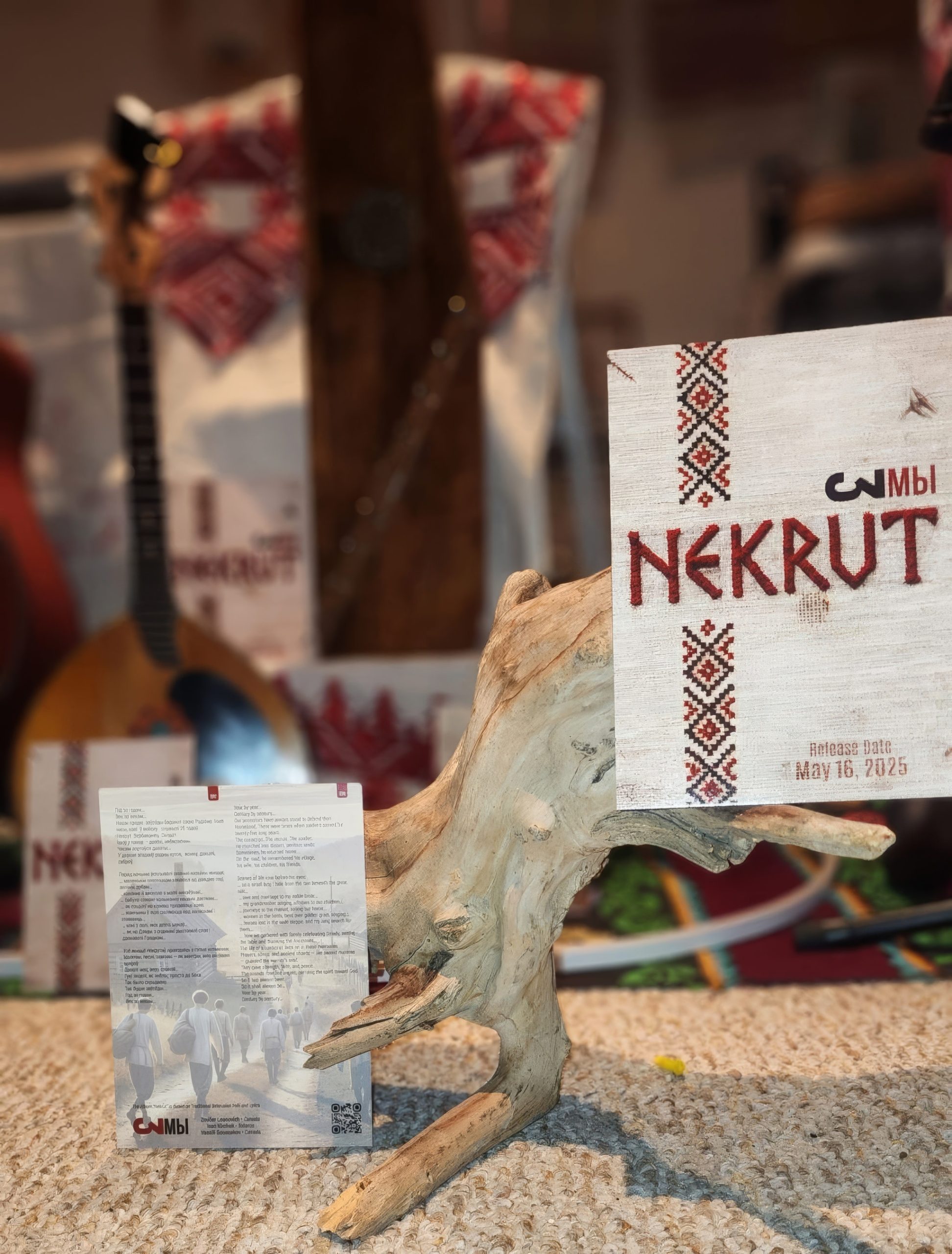
War is war, but life still goes on — even during war.
And our album, though it revolves around a military theme, is really about life. The songs capture the memories and dreams of our main character — the nekrut, the conscript taken into the army. It’s as if he relives his entire life, recalling different moments, longing for brighter times. Yes, his fate is tragic — he’s going off to war — but even on that path, there is life. That’s why I wouldn’t call the whole album sorrowful. We even have joyful songs, ones you could dance to.
⸻
“A thread that connects the heritage of ancestors and descendants”
– When listening to the album, one notices a distinctly modern sound — not traditionally folkloric. Yet it harmoniously integrates with the folk instruments.
– Yes, absolutely — that was intentional from the beginning. We didn’t want to sound too much like Troitsa or other folklore-based projects. So we introduced electronic music, modern technologies, and combined it all with the folk lyrics and material that Ivan collected during his ethnographic expeditions across Belarus. I believe we succeeded in creating a project like no other.
We blended authentic instruments — such as husli, lyre, ocarinas, domra — with synthesizers, orchestral textures, and modern sound design.
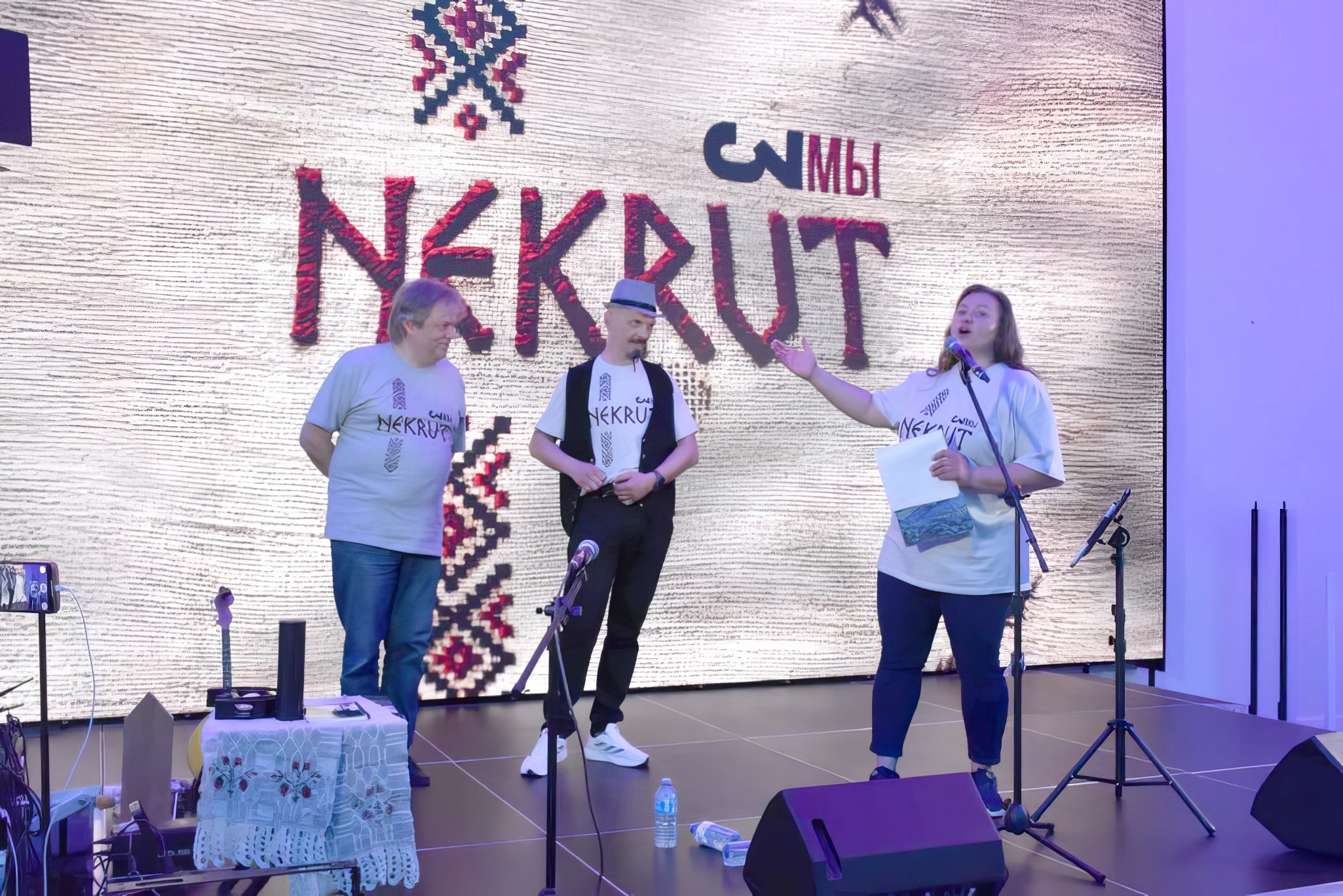
Originally, we had more songs that we planned to include in the album, but in the end, we trimmed the list and arranged the tracks in such a way that a logical life storyline of the main character could be followed from beginning to end. We also added three bonus tracks to compare how they sound a cappella versus with musical accompaniment.
⸻
– Besides the use of electronic music, in what other ways is the album connected to the present? What can Belarusians today take from the story of an 18th–19th century nekrut?
– That life is better than war.
The album carries a clear anti-war message and emphasizes core values — friendship, brotherhood, and life. Overall, it’s like a thread that connects the heritage of ancestors with their descendants. You can hear that most clearly in the song “Dziady” — it’s an original piece by Ivan, rooted in traditional rituals and customs. The same goes for his authorial songs “Kalykhanka” (Lullaby), “Zaklichka” (Calling Song). We also included folk songs, like “Try kani” (Three Horses), which was sung by women in Polesia — it was recorded there.
⸻
The Philosophy of Life
– In what setting would you recommend listening to the album? Should it be played in the background or listened to attentively with focus on the lyrics?
– I personally enjoy listening to it in the car — I’ve got a good sound system there.
The album is well-produced, with carefully balanced sound, so if you’re listening on a small speaker, you’re missing a lot. I recommend using high-quality audio equipment.
And yes, I would also recommend paying attention to the lyrics — because they carry philosophy.
What kind? The philosophy of life, above all.
For example, there’s a song where a woman says: “I was waiting for my husband, watching the beaten path.” She waited for her husband, but he was killed. That’s something that doesn’t change and repeats with every war. Belarusian folklore holds incredibly deep meaning. Through the songs in the album, you can imagine how our ancestors lived — their way of life, how they loved, fought, joked, worked, and more.

On our website, all the song lyrics are available in both Belarusian and English.
We made a conscious effort to include English translations so English-speaking listeners could understand the texts.
– Do local people listen to Belarusian music?
– For the album presentation, I specifically invited a local Toronto band – they later posted about us on social media. In general, local residents enjoy music and folklore because Canada is a multicultural country. The philosophy here is: we are Canadians, but we are all different. That’s a key distinction from the USA, where your primary identity is “American.” In Canada, diverse cultures are respected and preserving your heritage is encouraged. Many festivals are held – sadly, there are still few Belarusian ones.
But there are nice exceptions: the folk group Yavarovyya Lyudzi, which I am a part of, organizes a Kupalle (summer solstice) festival in the town of Slucak, about 230 km north of Toronto. It has become a yearly tradition. Around 200 people usually attend, including Canadians. So if you ever have a chance – come visit, you’ll be warmly welcomed. This year is no exception.
⸻
Folklore is Intellectual Music
– What was your role in the album?
– Mainly organizational and producer-related – to find resources, coordinate and set up everything. I also did some backing vocals and played the lyre and guitar on a few tracks.
To create a project like this, you need money and motivation. First and foremost, if you’re passionate about it, you’ll find a way to make it happen. But of course, funding is important – for tickets, accommodation, and so on. When all of that aligns, success follows.
– Will there be any further promotion of the album? Any live performances?
– I’m not expecting much. Not everyone listens to folklore. As Ivan Kirchuk said, it’s intellectual music – not for everyone. And I completely agree.
We created our own website, uploaded all the info ourselves, and are distributing the album independently. It’s already available on all major platforms – Spotify, Google Music, Apple Music. Interestingly, according to stats we’ve checked, there are plenty of streams and listens, but no downloads – because you have to pay for those. And most people aren’t too eager to spend money on culture. But we’re not discouraged – this project was never about money. The more people listen and share it with others, the better. Our music – and with it, our language – will continue to live and resonate in the universe.
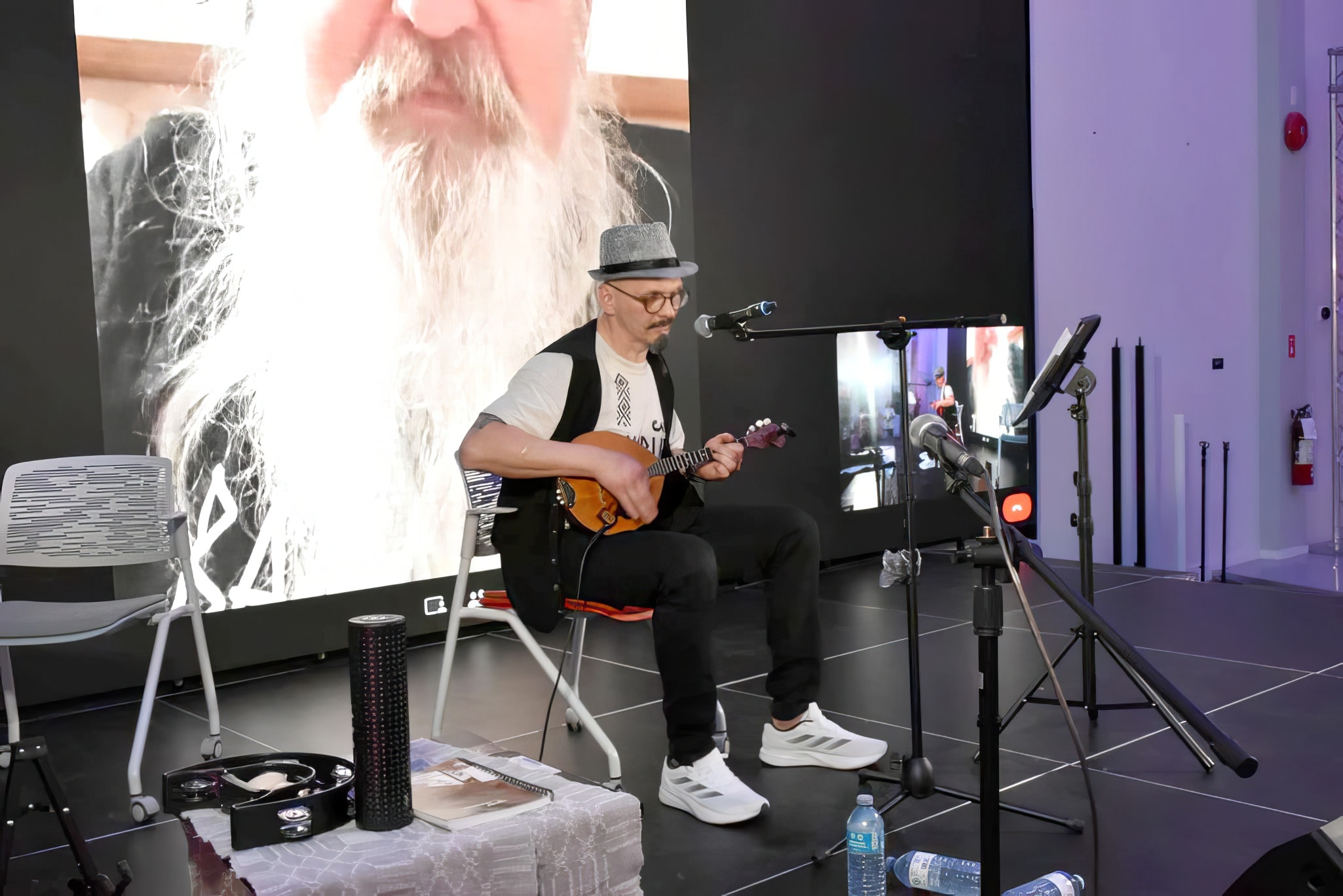
Of course, without any resources, none of this would have been possible.
I have a job, friends, and circumstances that allow me to do this. If everything hadn’t aligned, I wouldn’t have been able to participate in this album.
We’re open to performing the album live if we receive invitations.
⸻
“Culture lives as long as we – its bearers – live”
– You say people aren’t ready to pay for culture. Lately, we often hear that it’s getting harder to fund cultural projects, and if Belarusians themselves don’t support them, many of these initiatives simply won’t survive. What’s your view on the future of our culture?
– I believe it’s harder for Belarusian culture in the homeland. Abroad, in this regard, things are actually quite good. For example, I’ve seen that whenever a Belarusian band or artist visits the U.S., the venues are always full. The same goes for Toronto. So Belarusian culture does live abroad. But there is a catch.
Culture lives as long as we – its bearers – live.
And our children, who were born abroad, are already different people. I can see this in the kids here in Canada. They live their Canadian lives and are far removed from Belarus. That’s the danger: once we’re gone, and if there’s no support coming from Belarus, the culture will begin to fade. It’ll last through our lifetime, but what happens after is uncertain.
Yes, the children of Belarusians often understand and even speak the language, and they know some traditions passed down by their parents. But they were either born here or arrived very young. They’ve never lived in Belarus, never experienced its atmosphere from within. For example, how can they understand what a village is if they’ve never even been to one? In Canada, rural places are very different, not like our idea of a village. So without support from Belarus, culture will inevitably start to disappear.
– What do you mean by “support from Belarus”?
– For that to happen, there needs to be freedom in Belarus. Because when there is freedom, life flourishes, there are many opportunities, and you can create any project you want. If there’s freedom, there will be language, culture, and a Belarus that truly feels Belarusian.
– Will the “3MI” project have another album?
– Yes, we’ve discussed continuing our work. We’re considering making a Kupalle (summer solstice) themed album.
– Where can people listen to the album or buy the CD?
– First and foremost, on our website: 3mi.ca. From there, you can access any streaming platform to listen. Soon we’ll also enable CD orders, and the discs will also be available this summer in Minsk.
Hanna Hanchar for Belsat.eu